From a raw 64-channel recording to a clean event-related potential, twice: scripted in Python with MNE, then replicated in MATLAB with EEGLAB. Three sessions, six contact hours, one real dataset, three checkpoints.
Session 1's pipeline: eight steps from a raw .mff to a clean continuous file. Session 2 continues to epochs and ERPs; Session 3 repeats everything in EEGLAB.
01
What the day is about
Every participant takes one real recording — a 64-channel EGI dataset from the lab's covert/overt articulation study — from the file on disk to a finished ERP, first in Python with MNE, then again in MATLAB with EEGLAB. The point is not only the pipeline but the comparison: what each step does, why two toolboxes make the same decisions in different clothing, and how to read a Methods section critically.
Session 1 · 09:30
MNE I — raw to clean
Sampling, channels, reference; loading an .mff; filtering; bad channels; average reference. Checkpoint 1: a filtered, re-referenced power spectrum.
Session 2 · 11:45
MNE II — clean to ERP
ICA for eye and muscle artefacts; events and epochs; averaging; topographic maps; a first look at time–frequency analysis. Checkpoint 2: an evoked plot with a topomap.
Session 3 · 14:45
The EEGLAB round
The same pipeline replicated in EEGLAB with ICLabel; side-by-side comparison of the two ERPs and where they differ. Checkpoint 3: an EEGLAB ERP and a saved .set.
By the end of the day, each participant has
a working Jupyter notebook that loads, filters, cleans, epochs and averages the dataset in MNE-Python;
an EEGLAB .set file and script reproducing the same pipeline;
a one-page written comparison of the two outputs (take-home, due Friday 18 September);
a Methods paragraph they can defend, written from their own numbers.
Who should attend, and what to bring
Students of PSYC239. Other SIAS students with an interest in cognitive neuroscience are welcome as seats allow. No prior EEG experience is assumed; basic Python familiarity helps. Bring your own laptop and charger; install instructions are circulated the week before, with an optional install clinic on the Thursday. Lab machines with MATLAB licences are reserved for the EEGLAB session, with pairing allowed.
MNE I: orientation; loading and inspecting; filtering; bad channels and re-referencing; guided practice → Checkpoint 1
11:30
Break
11:45
Session 2
MNE II: ICA; events and epochs; averaging and visualisation; guided practice → Checkpoint 2; stretch: time–frequency
13:45
Lunch
TA team debrief; pairing for the afternoon
14:45
Session 3
The EEGLAB round: orientation; import; replication; ERP and comparison; guided practice → Checkpoint 3; scripting versus GUI
16:45
Wrap-up
Take-home assignment briefing; feedback form
03
The dataset, and what it looks like
One anonymised participant from the lab's study of alpha-band power during covert and overt articulation (Gundapaneni, Sengupta, Mandal & Maganti, in press): a 22-minute, 250 Hz, 64-channel EGI recording with 200 cued trials across five conditions. Participants work with the same file, the same event codes and the same preprocessing decisions that appear in the published Methods. Every figure below was produced from that recording with the bootcamp's own pipeline.
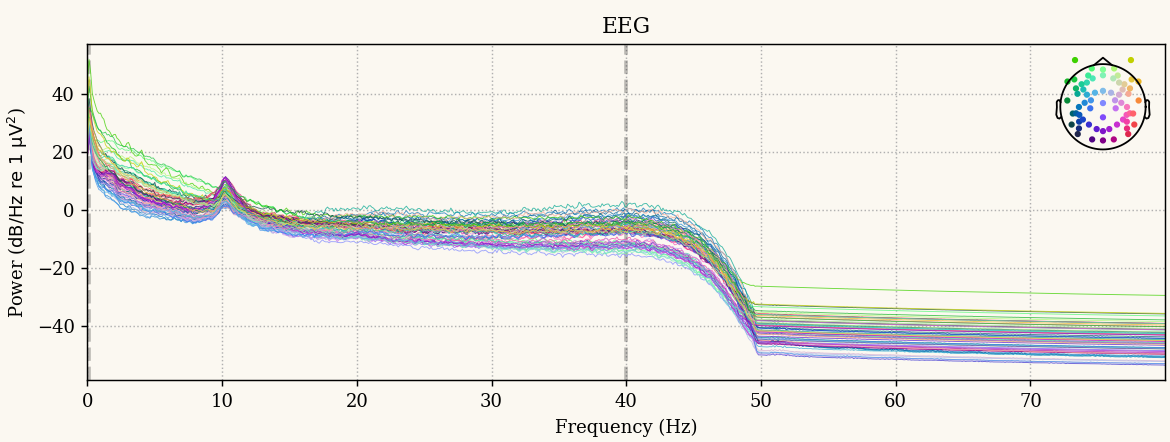
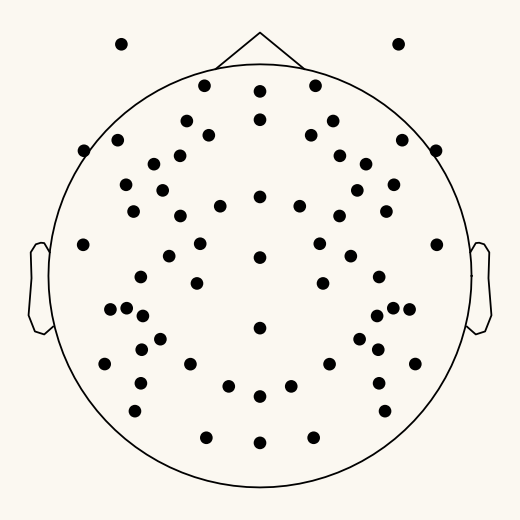
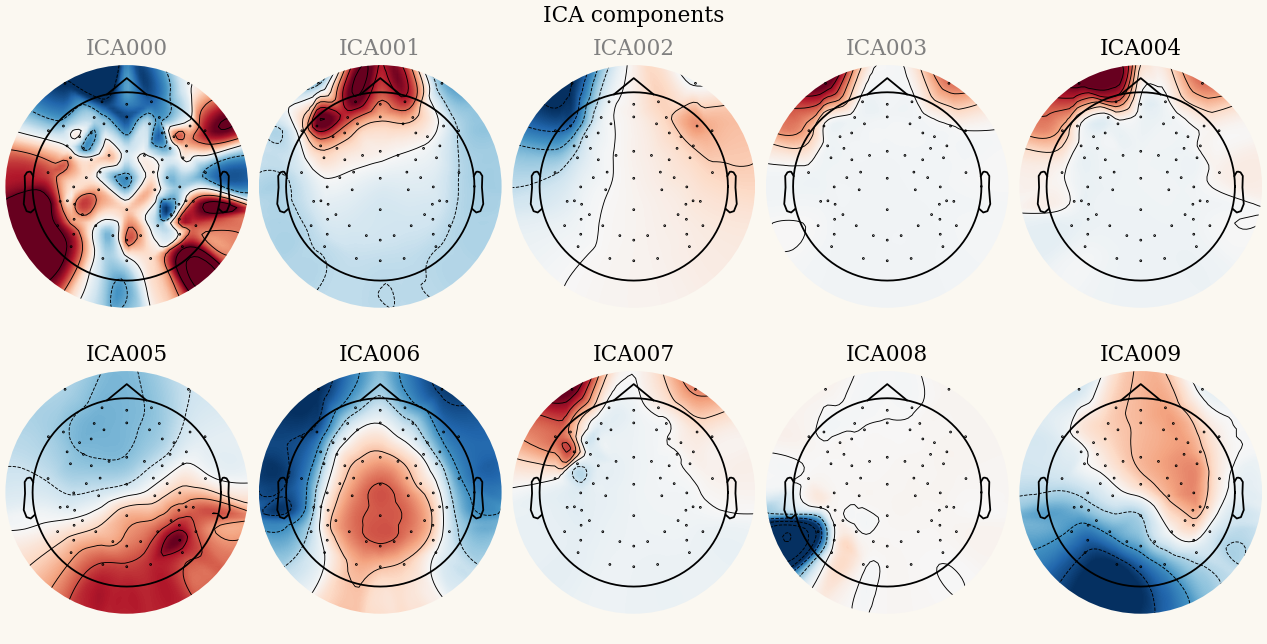
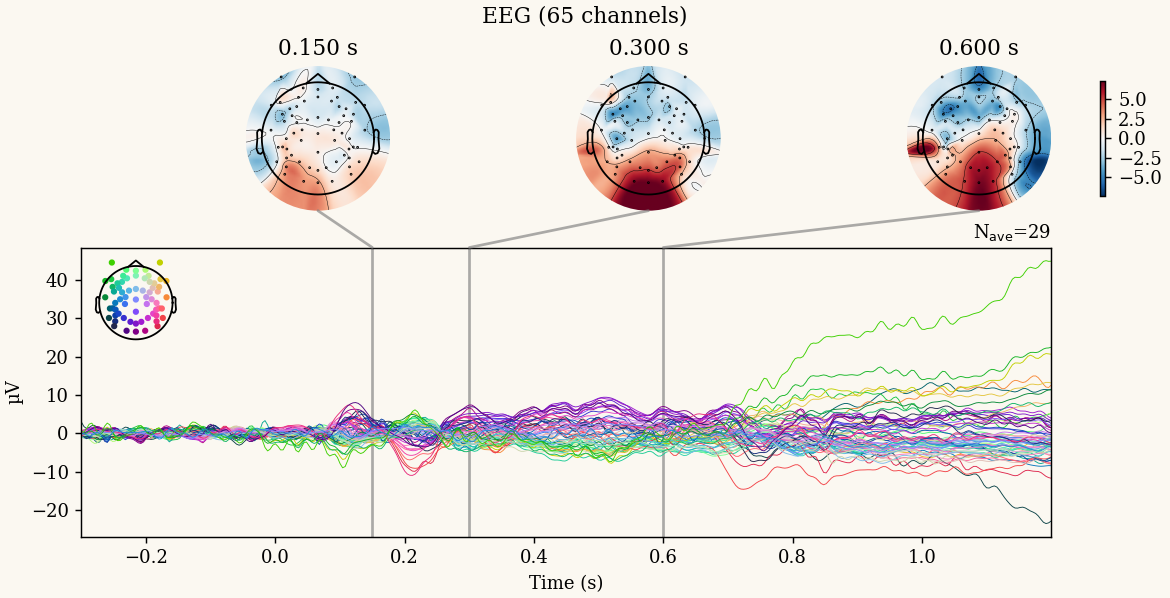
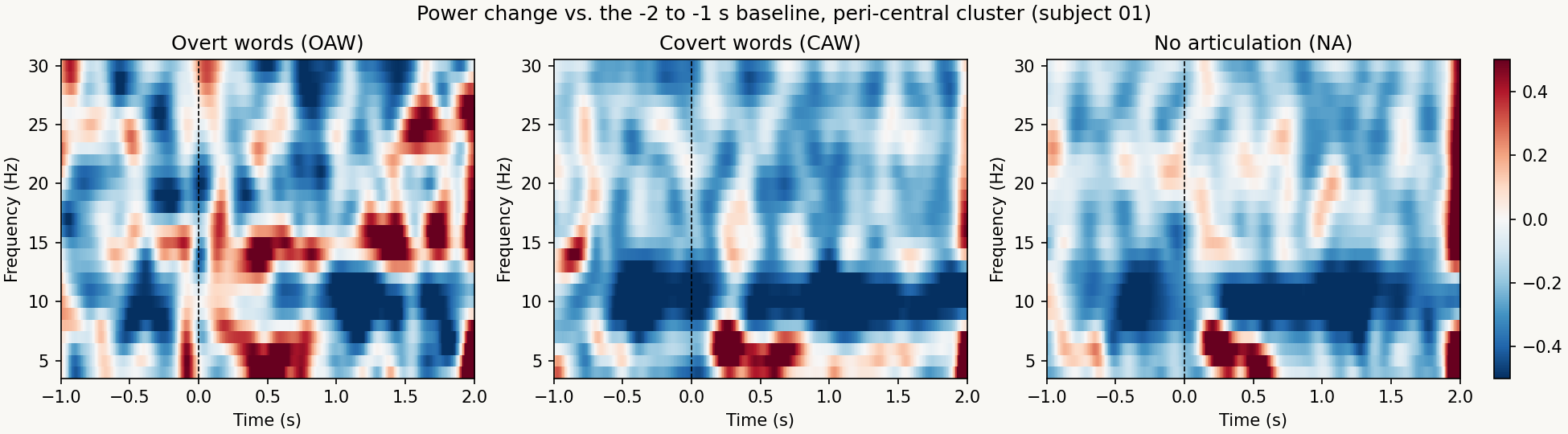
Checkpoint 1. The power spectrum after a 0.1–40 Hz band-pass, 50 Hz notch, channel repair and average reference. The peak at 10 Hz is the participant's own alpha rhythm.The HydroCel GSN 64 layout, as MNE reads it from the recording's own coordinates file.Session 2. Independent components: the blink (ICA001) and horizontal eye movements (ICA002) beside components that look like brain.Checkpoint 2. The cue-locked ERP for overt words with scalp maps at three latencies. The late drift on the outermost channels is the mouth starting to move — a point the bootcamp makes explicitly.Stretch block. Alpha power relative to the preceding rest period for overt, covert and control trials, computed the way the study did it.
04
From the day
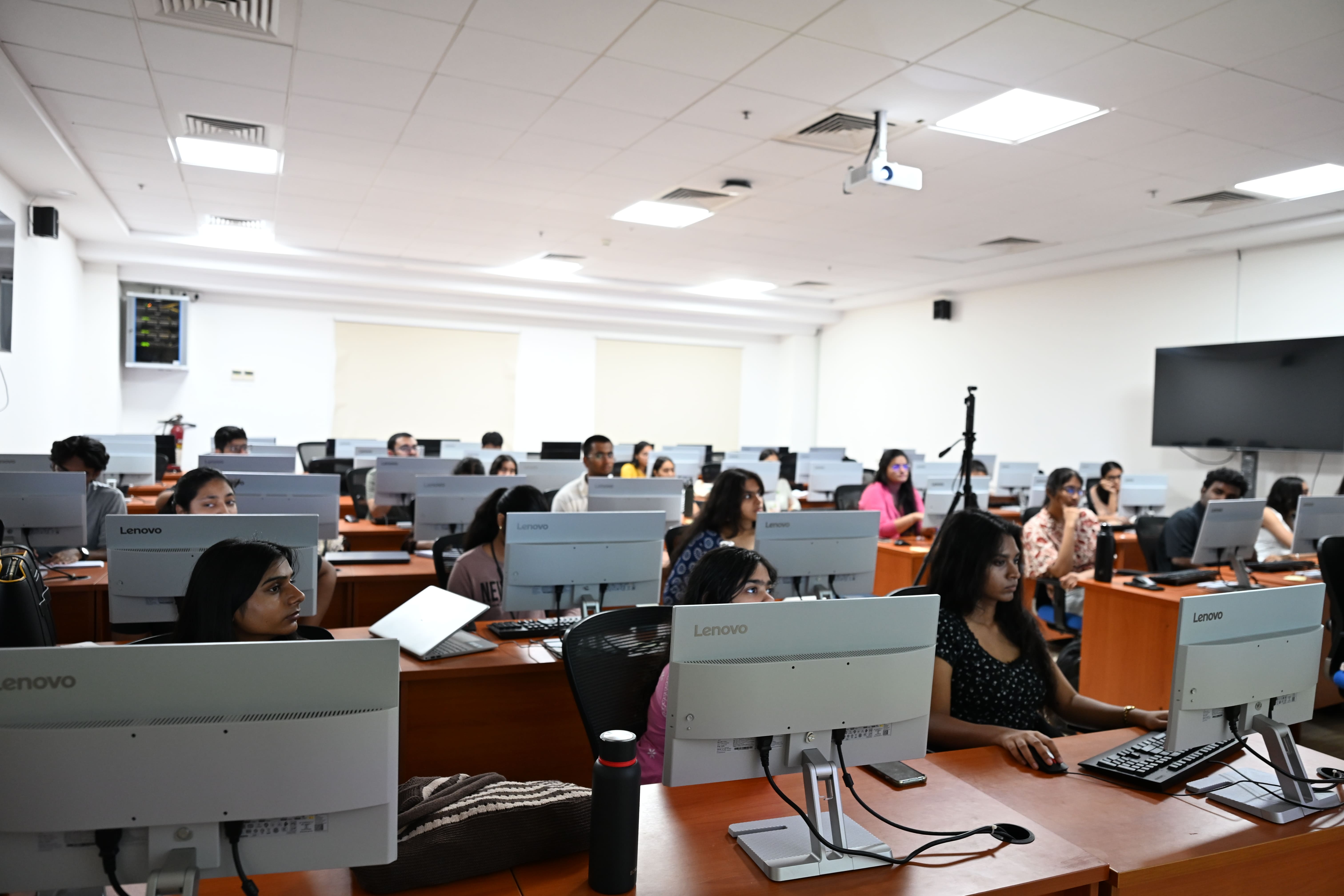
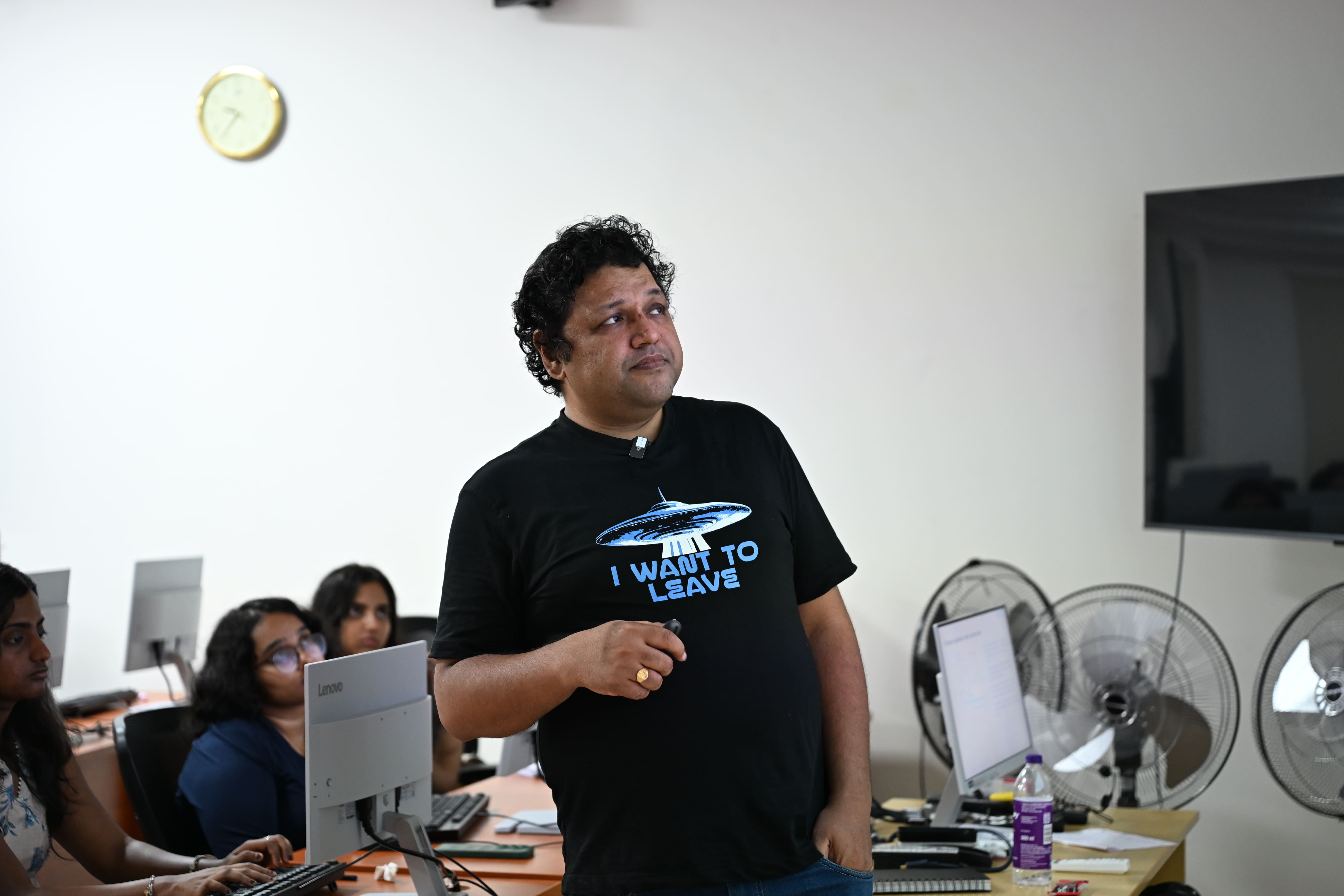
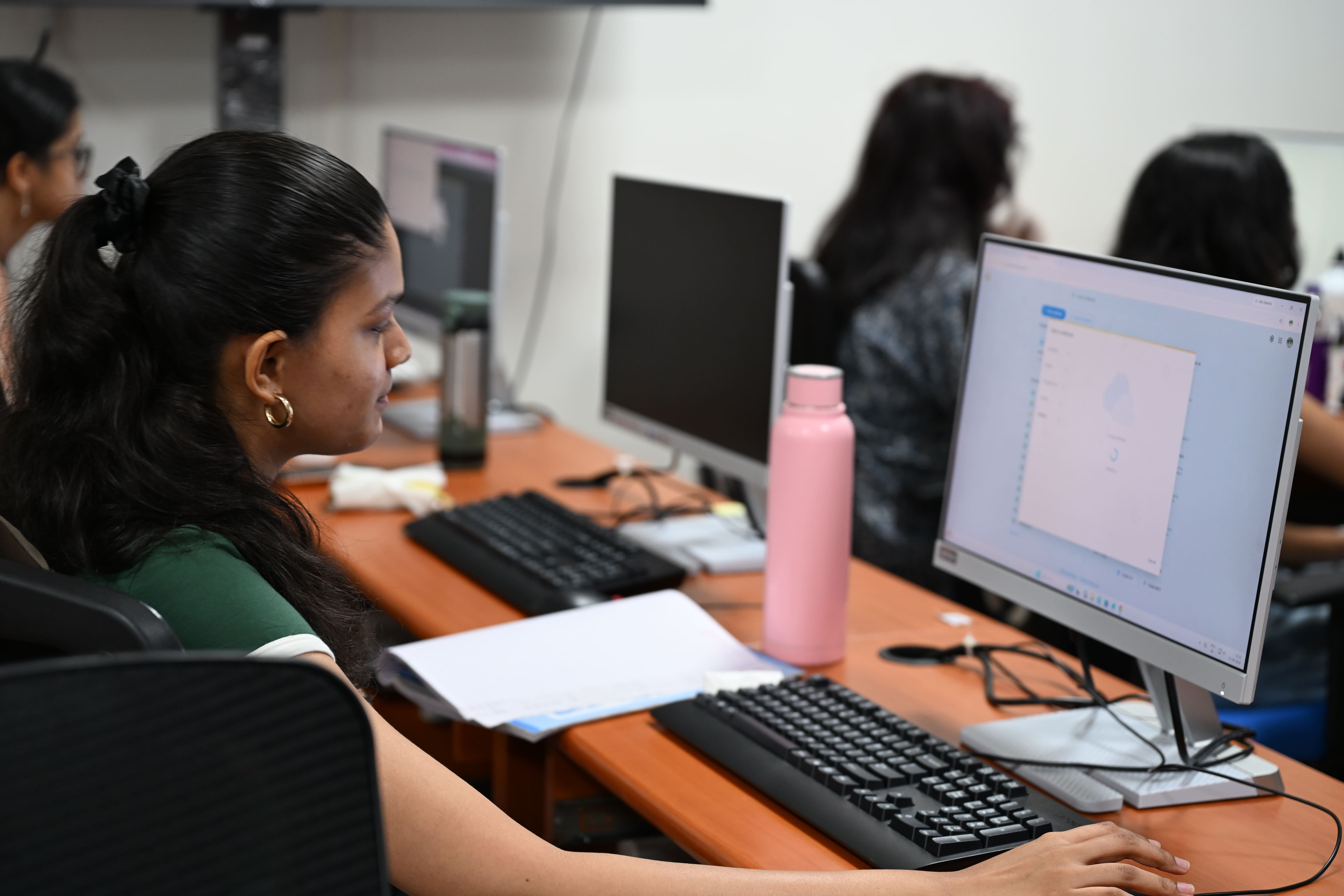
Photographs from the bootcamp, 12 September 2026.
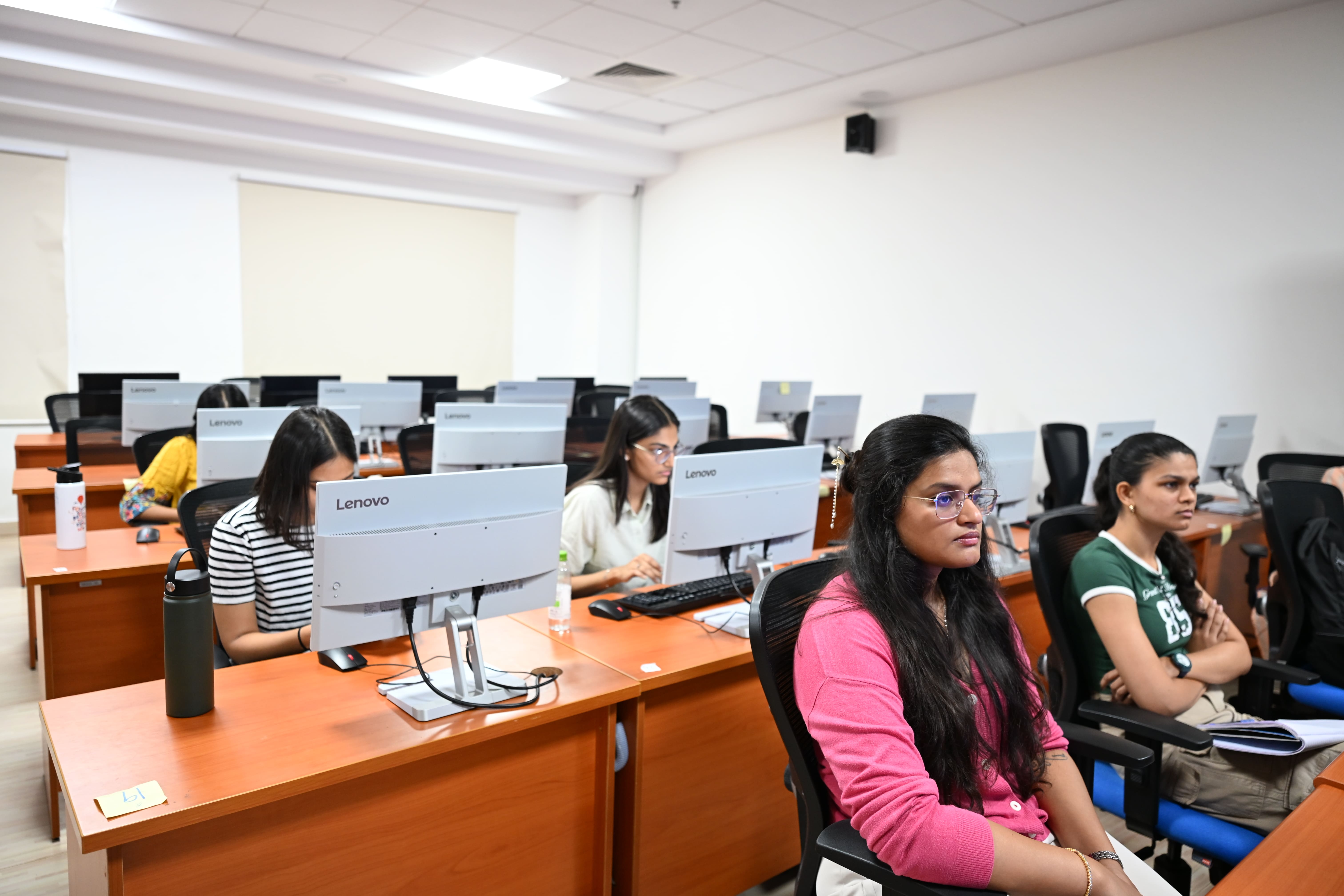
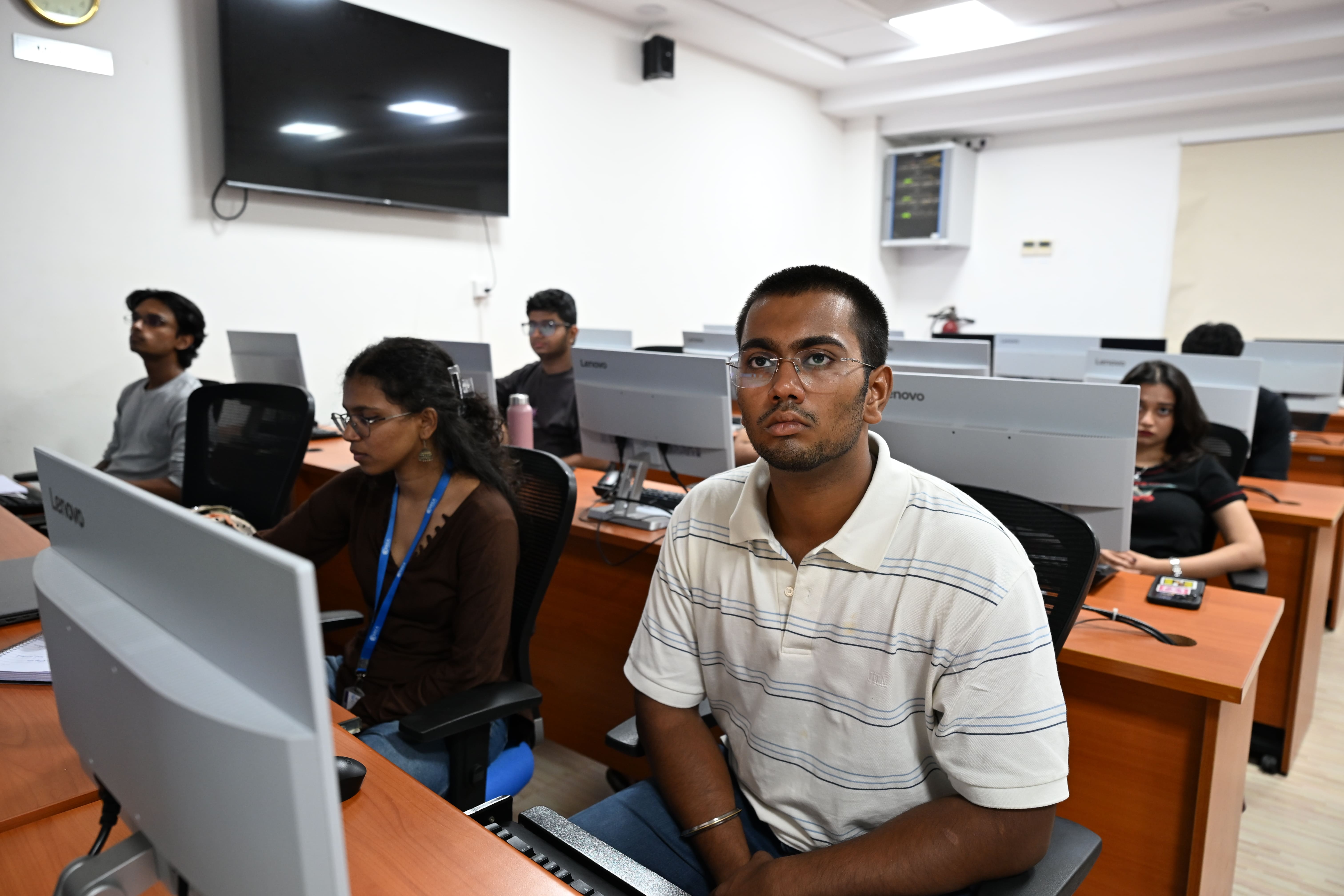
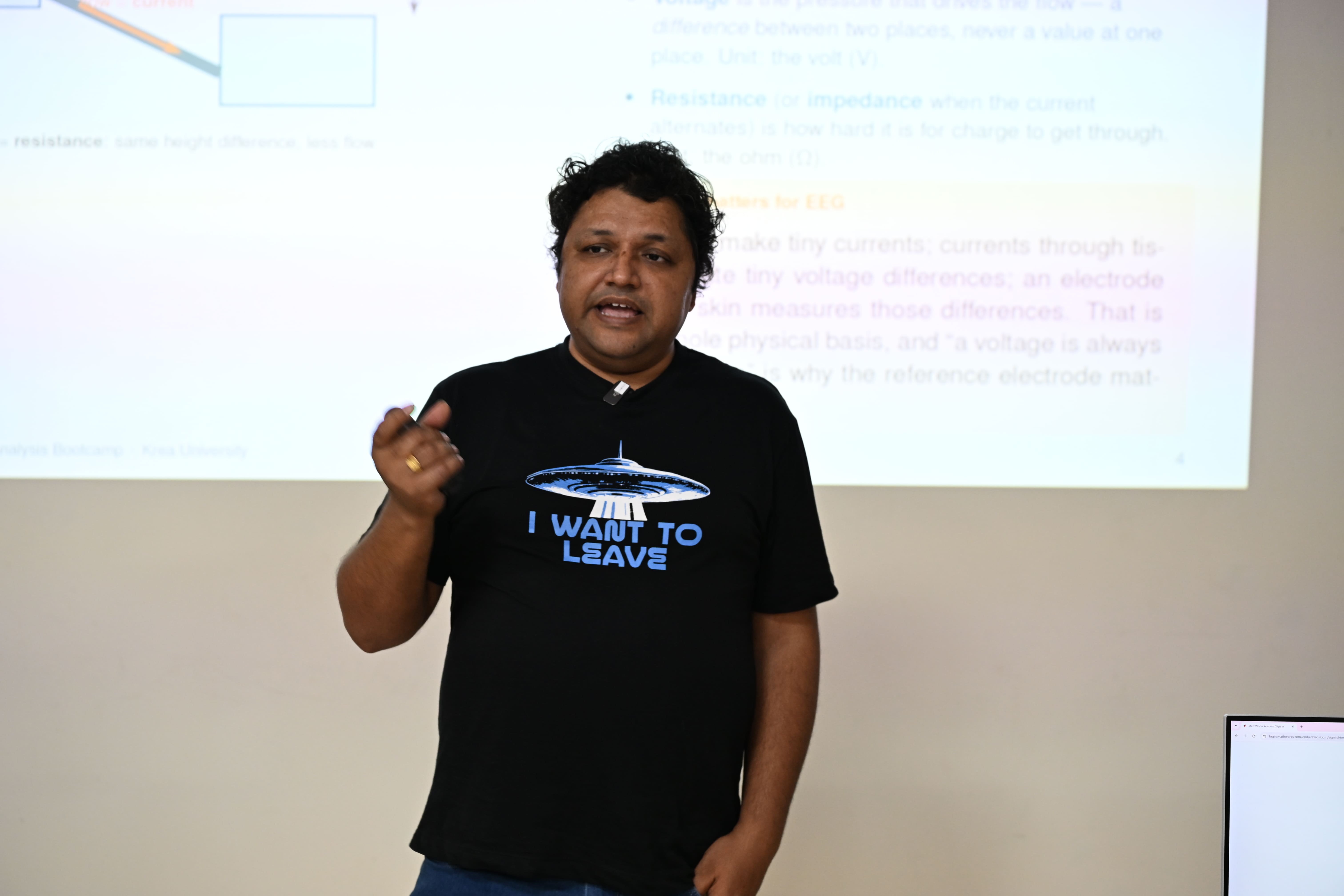
Session 1 — orientation and the first look at the raw recording.Working through the eight-step pipeline from .mff to clean continuous data.Guided practice, with floor support from the teaching team.Checkpoint verification between sessions.Session 3 — the same pipeline again, in EEGLAB.The full cohort at the close of the day.
05
Teaching team
Instructor
Dr. Rakesh Sengupta
Assistant Professor, SIAS; Principal Investigator, Computational Cognition Laboratory. Computational neuroscience of number, memory and time; runs the laboratory's EEG programme.
Teaching Fellow
Lekhana Priya Gundapaneni
Overall coordination, co-instruction, checkpoint verification. First author of the study the dataset comes from.
Teaching Assistant
Rakshitaasai Karthinarayanan
Python and MNE floor support; environment and package troubleshooting; the shared “fixes” document.
Teaching Assistant
Arush Menon
MATLAB and EEGLAB setup and floor support; lab-machine plugins (MFFMatlabIO, ICLabel); room and logistics.
06
Practical information
Questions about attending, seats for non-PSYC239 students, or bringing your own dataset for the practice blocks: write to the instructor. Participants are set up at an install clinic on the Thursday before the event; the dataset and a backup are provided on the day.
DateSaturday, 12 September 2026
Time09:15 arrival · sessions 09:30–17:00
VenueComputer lab, SIAS, Krea University, Sri City
Contactrakesh.sengupta@krea.edu.in